Good afternoon,
A practical assignment for geography, not again! Our assignment this time was to do a research on our own environment. Environment in this case could be anything, from a biological research to researching the amount of schools in two different neighbourhoods.
In order to keep ourselves interested in this practical assignment we've decided to compare two main shopping streets. And the two closest and biggest shopping streets were the Grote Houtstraat and the Kalverstraat.
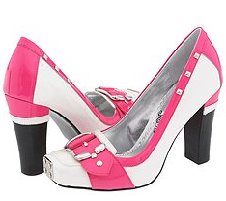
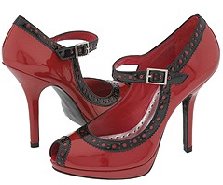
For the girls; if you get bored by the text we (unfortunately) had to write, try looking at the magnificent high heels on the right.
For the guys; try to look through the pink background, font and the high heels. Our subject turned out to be quite interesting!
Have fun, and enjoy our practical assignment,
Sanne and Yona
ps: The entire assignment can be found on the website geografisch-onderzoek-haarlem.blogspot.com
4/6/09


2. Main- and subquestions and hypotheses
Main- and subquestions
Main question
What is the difference between the Kalverstraat and the Grote Houtstraat?
Subquestions
1: What is the history of both streets and when did they become shopping streets?
2: What is the difference in legislation and rent between the Kalverstraat and the Grote Houtstraat nowadays?
3: What is the difference between the shops that are situated in the different shopping streets?
4: What is the difference between the people visiting the Kalverstraat and the Grote Houtstraat with regard to their gender, age, place of residence and purpose of their visit?
Hypotheses
Subquestions
1: Both streets became shopping streets almost during the same period.
2: The legislation for the Kalverstraat is stricter than in the Grote Houtstraat. Furthermore the rent in the Kalverstraat is much higher than the rent in the Grote Houtstraat.
3: The shops are relatively similar, however in the Kalverstraat more chain shops are situated and shops have several branches in the Kalverstraat, whereas they don’t in Haarlem.
4: The gender, the age and the purpose of the visitors will be almost the same. The visitors who visit the Kalverstraat however come from all over the country and many are foreign. The visitors of the Grote Houtstraat are only from Haarlem and surroundings.
Main question
What is the difference between the Kalverstraat and the Grote Houtstraat?
Subquestions
1: What is the history of both streets and when did they become shopping streets?
2: What is the difference in legislation and rent between the Kalverstraat and the Grote Houtstraat nowadays?
3: What is the difference between the shops that are situated in the different shopping streets?
4: What is the difference between the people visiting the Kalverstraat and the Grote Houtstraat with regard to their gender, age, place of residence and purpose of their visit?
Hypotheses
Subquestions
1: Both streets became shopping streets almost during the same period.
2: The legislation for the Kalverstraat is stricter than in the Grote Houtstraat. Furthermore the rent in the Kalverstraat is much higher than the rent in the Grote Houtstraat.
3: The shops are relatively similar, however in the Kalverstraat more chain shops are situated and shops have several branches in the Kalverstraat, whereas they don’t in Haarlem.
4: The gender, the age and the purpose of the visitors will be almost the same. The visitors who visit the Kalverstraat however come from all over the country and many are foreign. The visitors of the Grote Houtstraat are only from Haarlem and surroundings.
3/30/09
3. Subquestion 1
Introduction
Sub question 1: What is the history of both streets and when did they become shopping streets?
Hypothesis 1: Both streets became shopping streets almost during the same period.
To answer this sub question we’ll tell the history of both streets in short.
Grote Houtstraat
The Grote Houtstraat was initially only called Houtstraat, not until 1379 ‘Grote’ was added to the name.
Until the second half of the 19th century, the Grote Houtstraat had always been a regular housing street. From 1870 onwards many of the former private houses turned into shop houses, so the ground-level part of the house was broken down and replaced by poles and windows (not really to the satisfaction of Haarlem’s inhabitants). Not until the end of the 19th century it became clear that the Grote Houtstraat was actually gaining importance as a prominent shopping street.

One of the first shops in the Grote Houtstraat was the V&D. Since 1896 V&D had had a shop in the Grote Houtstraat and between the years 1910 and 1921 V&D bought all properties in the Grote Houtstraat, the Verwulft and the Gierstraat (except Van der Pigge of course), where the big building of the V&D is now situated. In exchange for extra space at the Verwulft the V&D got permission to build the first department store of Haarlem. The local council badly wanted the extra space at the Verwulft, for traffic there was increasing and so it could broaden the street. This obviously meant that the Grote Houtstraat was very easy to reach.

Kalverstraat
The name Kalverstraat was first mentioned in a piece from 1393. It’s quite unknown when exactly the Kalverstraat came into existence, for during the Middle Ages streets weren’t officially recorded. Back then the Kalverstraat wasn’t exactly the same as it is nowadays. During the Middle Ages the Kalverstraat was the street that ran from the Dam square (which was back then called Plaetse) until the Spui. Not until approximately 1400 the street got its current length.
It’s not certain when the Kalverstraat actually became a shopping street, but it is certain that it must have been so in 1585, for the profession of most people who lived in the Kalverstraat was shopkeeper. In the year 1742 there were about 236 houses in the Kalverstraat of which 220 were shop houses.

The first steps towards making the Kalverstraat accessible for pedestrians only was when in 1845 two broad strips on both side of the street were asphalted, for the wheels of vehicles. The middle part of the street remained cobbled, for the drivers of the vehicles were afraid that the horses might slip if the middle part became asphalt as well. Later however, round about 1871, the entire street was asphalted. This meant that most of the vehicles disappeared from the Kalverstraat and that it became a pedestrian precinct.

Conclusion
The hypothesis was: Both streets became shopping streets almost during the same period. How off we were! Although the streets are probably just as old and their present name was first mentioned at approximately the same time, the Kalverstraat became a shopping street almost three centuries before the Grote Houtstraat did! The Grote Houtstraat became a shopping street during the second half of the 19th century, while the Kalverstraat was so without doubt during the 16th century, but probably even during the 15th.
Sub question 1: What is the history of both streets and when did they become shopping streets?
Hypothesis 1: Both streets became shopping streets almost during the same period.
To answer this sub question we’ll tell the history of both streets in short.
Grote Houtstraat
The Grote Houtstraat was initially only called Houtstraat, not until 1379 ‘Grote’ was added to the name.
Until the second half of the 19th century, the Grote Houtstraat had always been a regular housing street. From 1870 onwards many of the former private houses turned into shop houses, so the ground-level part of the house was broken down and replaced by poles and windows (not really to the satisfaction of Haarlem’s inhabitants). Not until the end of the 19th century it became clear that the Grote Houtstraat was actually gaining importance as a prominent shopping street.

One of the first shops in the Grote Houtstraat was the V&D. Since 1896 V&D had had a shop in the Grote Houtstraat and between the years 1910 and 1921 V&D bought all properties in the Grote Houtstraat, the Verwulft and the Gierstraat (except Van der Pigge of course), where the big building of the V&D is now situated. In exchange for extra space at the Verwulft the V&D got permission to build the first department store of Haarlem. The local council badly wanted the extra space at the Verwulft, for traffic there was increasing and so it could broaden the street. This obviously meant that the Grote Houtstraat was very easy to reach.

Kalverstraat
The name Kalverstraat was first mentioned in a piece from 1393. It’s quite unknown when exactly the Kalverstraat came into existence, for during the Middle Ages streets weren’t officially recorded. Back then the Kalverstraat wasn’t exactly the same as it is nowadays. During the Middle Ages the Kalverstraat was the street that ran from the Dam square (which was back then called Plaetse) until the Spui. Not until approximately 1400 the street got its current length.
It’s not certain when the Kalverstraat actually became a shopping street, but it is certain that it must have been so in 1585, for the profession of most people who lived in the Kalverstraat was shopkeeper. In the year 1742 there were about 236 houses in the Kalverstraat of which 220 were shop houses.

The first steps towards making the Kalverstraat accessible for pedestrians only was when in 1845 two broad strips on both side of the street were asphalted, for the wheels of vehicles. The middle part of the street remained cobbled, for the drivers of the vehicles were afraid that the horses might slip if the middle part became asphalt as well. Later however, round about 1871, the entire street was asphalted. This meant that most of the vehicles disappeared from the Kalverstraat and that it became a pedestrian precinct.

Conclusion
The hypothesis was: Both streets became shopping streets almost during the same period. How off we were! Although the streets are probably just as old and their present name was first mentioned at approximately the same time, the Kalverstraat became a shopping street almost three centuries before the Grote Houtstraat did! The Grote Houtstraat became a shopping street during the second half of the 19th century, while the Kalverstraat was so without doubt during the 16th century, but probably even during the 15th.
4. Subquestion 2
Introduction
Our second subquestion is “What is the difference in legislation and rents between the Kalverstraat and the Grote Houtstraat nowadays?”
We will answer this question by looking through the legislation for both streets and by searching for the rent per square meter.
Results Grote Houtstraat
Legislation
To find the legislation for the Grote Houtstraat we used the Bestemmingsplan.
The Grote Houtstraat is a “Centrumvoorziening A”. This means that people from all over the neighbourhood come here to do their shopping. Generally a “Centrumvoorziening A” is better visited and more expensive than a “Centrumvoorziening B”
So what kind of legislation and regulations are used in a Centrumvoorziening A in Haarlem?
Purpose
- First floor
Shops, Cultural associations, Conference and meeting halls, Offices, Hotels and entrances to parking lots.
- Other floors
Hotel, Cultural associations, Offices and Housing
But once upper floors are being used for housing, their purpose may not change again.
For those purposes several provisions may be situated in and around these buildings such as Structures that are not buildings, streets, gardens, trees and energy provisions.
Constructing and Renovation
There are several regulations concerning changes in and around the buildings. Such as:
- The outer walls of the buildings may only be built against the border set for a neighbourhood.
- Buildings must be build against each other, no open spaces may be found between them.
- Buildings may not be more than four meters higher than the height that has been agreed on for the gutter.
- The gutter may not be higher than the agreed height for the gutter.
- Buildings must have a roof.
- Only one dormer may be situated in this roof, the maximum width for this dormer is 2.5 meters.
- For decorating the front façade of the building, materials may be used if they match the scene and the surrounding buildings.
- The buildings may have a cellar with a maximum depth of 5 meters below the street level.
- Outbuildings may be situated behind the buildings with a maximum height of 3 meters. These outbuildings may contain a rooftop terrace.
Rent
It was quite hard to find an exact amount somewhere. As far as we know, there has never been a research on this subject or at least we couldn’t find it! So we decided to look at shops that are being rented in City Centre locations. We’ve combined those rents and came to the conclusion that one pays approximately 900 euros per square meter per year in the Grote Houtstraat.
Results Kalverstraat
Legislation
The Kalverstraat is meant for different purposes, which doesn't really tell us anything! Some of the buildings are specified for a purpose but most of them aren't.
So what kind of legislation and regulations are there for the Kalverstraat?
Purpose
The statement different purposes means that a building may always be used for:
- housing
- offices
- cultural associations
- public institutions
- shops
- public utilities
When specified the building may also be used for:
- smartshops
- restaurants/ cafés / hotels
- telephone shops
- gambling halls
- change offices
- businesses
- prostitution companies
- sexshops
- parkinglots (or entrances to) for bikes and/or cars
The lowerfloors may however not be used for offices, bussinesses, parkinglots and housing. But there must be an entrance to the housing situated at the upperfloors.
Construction and renovation
There are several regulations concerning changes in and around the buildings. Such as:
- Some buildings may not be reconstructed at all, because they are monuments.
- Buildings beneath the street level may only be used for cellars and public utilities.
- The first floor of buildings must be at least 3,5 meters in height.
- The total building must be at least 9 meters in height.
- The building must or have a flat rooftop or must have a roof that is 2 meters higher than the gutter.
- Rooftop terraces are not permitted.
- The façade must have a strict division in three parts.
- Buildings that are not houses may not be higher than 2 meters.
Note: a lot of buildings have extra legislation because they are or monuments, very old, very fragile or in some other way important to the city.
Rent
The rent in the Kalverstraat per square meter is number 21 in the list of most expensive housing prices in the world. The price per square meter per year is 2000 euros.
Conclusion
We've seen that the legislation for both streets is difficult to understand. Of course there are differences, but those are not really significant. The only thing that catches the eye when you read the regulations for both streets is that the legislation for the Kalverstraat is discribed in far more detail than the legislation for the Grote Houtstraat.
There is a big difference in rent. The rent in the Kalverstraat is much higher than the one in the Grote Houtstraat.
Our hypothesis to the second subquestion; "What is the difference in legislation and rent between the Kalverstraat and the Grote Houtstraat nowadays?" was "The legislation for the Kalverstraat is stricter than for the Grote Houtstraat. Furthermore the rent in the Kalverstraat is much higher than the rent in the Grote Houtstraat."
We can conclude that we were right. Even though there is not much difference in legislation the legislation is far more detailed in the Kalverstraat. The second part of our hypothesis was also right, the rents in the Kalverstraat are much higher than those in the Grote Houtstraat!
Our second subquestion is “What is the difference in legislation and rents between the Kalverstraat and the Grote Houtstraat nowadays?”
We will answer this question by looking through the legislation for both streets and by searching for the rent per square meter.
Results Grote Houtstraat
Legislation
To find the legislation for the Grote Houtstraat we used the Bestemmingsplan.
The Grote Houtstraat is a “Centrumvoorziening A”. This means that people from all over the neighbourhood come here to do their shopping. Generally a “Centrumvoorziening A” is better visited and more expensive than a “Centrumvoorziening B”
So what kind of legislation and regulations are used in a Centrumvoorziening A in Haarlem?
Purpose
- First floor
Shops, Cultural associations, Conference and meeting halls, Offices, Hotels and entrances to parking lots.
- Other floors
Hotel, Cultural associations, Offices and Housing
But once upper floors are being used for housing, their purpose may not change again.
For those purposes several provisions may be situated in and around these buildings such as Structures that are not buildings, streets, gardens, trees and energy provisions.
Constructing and Renovation
There are several regulations concerning changes in and around the buildings. Such as:
- The outer walls of the buildings may only be built against the border set for a neighbourhood.
- Buildings must be build against each other, no open spaces may be found between them.
- Buildings may not be more than four meters higher than the height that has been agreed on for the gutter.
- The gutter may not be higher than the agreed height for the gutter.
- Buildings must have a roof.
- Only one dormer may be situated in this roof, the maximum width for this dormer is 2.5 meters.
- For decorating the front façade of the building, materials may be used if they match the scene and the surrounding buildings.
- The buildings may have a cellar with a maximum depth of 5 meters below the street level.
- Outbuildings may be situated behind the buildings with a maximum height of 3 meters. These outbuildings may contain a rooftop terrace.
Rent
It was quite hard to find an exact amount somewhere. As far as we know, there has never been a research on this subject or at least we couldn’t find it! So we decided to look at shops that are being rented in City Centre locations. We’ve combined those rents and came to the conclusion that one pays approximately 900 euros per square meter per year in the Grote Houtstraat.
Results Kalverstraat
Legislation
The Kalverstraat is meant for different purposes, which doesn't really tell us anything! Some of the buildings are specified for a purpose but most of them aren't.
So what kind of legislation and regulations are there for the Kalverstraat?
Purpose
The statement different purposes means that a building may always be used for:
- housing
- offices
- cultural associations
- public institutions
- shops
- public utilities
When specified the building may also be used for:
- smartshops
- restaurants/ cafés / hotels
- telephone shops
- gambling halls
- change offices
- businesses
- prostitution companies
- sexshops
- parkinglots (or entrances to) for bikes and/or cars
The lowerfloors may however not be used for offices, bussinesses, parkinglots and housing. But there must be an entrance to the housing situated at the upperfloors.
Construction and renovation
There are several regulations concerning changes in and around the buildings. Such as:
- Some buildings may not be reconstructed at all, because they are monuments.
- Buildings beneath the street level may only be used for cellars and public utilities.
- The first floor of buildings must be at least 3,5 meters in height.
- The total building must be at least 9 meters in height.
- The building must or have a flat rooftop or must have a roof that is 2 meters higher than the gutter.
- Rooftop terraces are not permitted.
- The façade must have a strict division in three parts.
- Buildings that are not houses may not be higher than 2 meters.
Note: a lot of buildings have extra legislation because they are or monuments, very old, very fragile or in some other way important to the city.
Rent
The rent in the Kalverstraat per square meter is number 21 in the list of most expensive housing prices in the world. The price per square meter per year is 2000 euros.
Conclusion
We've seen that the legislation for both streets is difficult to understand. Of course there are differences, but those are not really significant. The only thing that catches the eye when you read the regulations for both streets is that the legislation for the Kalverstraat is discribed in far more detail than the legislation for the Grote Houtstraat.
There is a big difference in rent. The rent in the Kalverstraat is much higher than the one in the Grote Houtstraat.
Our hypothesis to the second subquestion; "What is the difference in legislation and rent between the Kalverstraat and the Grote Houtstraat nowadays?" was "The legislation for the Kalverstraat is stricter than for the Grote Houtstraat. Furthermore the rent in the Kalverstraat is much higher than the rent in the Grote Houtstraat."
We can conclude that we were right. Even though there is not much difference in legislation the legislation is far more detailed in the Kalverstraat. The second part of our hypothesis was also right, the rents in the Kalverstraat are much higher than those in the Grote Houtstraat!
5. Subquestion 3
Introduction
Sub question 3: What is the difference between the shops that are situated in the different shopping streets?
Hypothesis 3: The shops are relatively similar, however in the Kalverstraat more chain shops are situated and shops have several branches in the Kalverstraat, whereas they don’t in Haarlem.
To enable ourselves to answer this sub question, we went to the Kalverstraat and the Grote Houtstraat and wrote down all names of the shops and the most important product they sell. Next we typed out all those names and categorised the products. Lastly we made tables and graph.
Comparison of Grote Houtstraat and the Kalverstraat

Click to enlarge
To make the collected data clearer we’ve categorised it into four groups: services, shopping goods, catering and convenience goods.
Services
As expected the number of services is much higher in the Houtstraat than the Kalverstraat. Interestingly enough, in the most important shopping street of Haarlem a hairdresser and a shoe reparation store are still situated. Of course they also used to be located in the Kalverstraat, but they’ve long disappeared.
Shopping goods
For both streets the percentage of shopping goods is the highest. However, in the Kalverstraat shopping goods make up almost 91% of all the goods, in the Houtstraat only 84%. Shopping goods include all goods with a certain durability such as anything related with attire, electronics and pieces for one’s interior. Another word for shopping goods in English is comparison goods. This very clearly portrays what customers do with these goods, namely compare. For durable goods consumers want to have choice and therefore go to a street where all shops that sell a certain item are set. For example, if someone is looking for jeans, that person won’t buy the first jeans he comes across. He’ll go to many stores to be sure that he buys the best possible jeans. Hence many shops close to each other selling the same item stimulates purchase. What is interesting to notice is that in the Houtstraat shops that sell only one, rather expensive item, aren’t situated, whereas they are in the Kalverstraat. In the Kalverstraat several shops are located that sell almost only one item, such as ties or watches. On the other hand, there are two jewellers in the Houtstraat, but the percentage of jewellers in the Kalverstraat is more than twice as big. Something else remarkable is that almost all percentages of a main product related to attire are for the Kalverstraat higher to much higher than for the Houtstraat. Conversely, all non-attire main products are often higher for the Houtstraat, with telecommunication and opticians in particular.
Catering
The total percentage of catering for the Houtstraat is higher than the Kalverstraat. Also in this case catering businesses were initially situated in the Kalverstraat as well, but they have been replaced by multinationals or chain shops.
Convenience goods
This percentage is higher for the Houtstraat as well. The percentage of food is in the Houtstraat almost twice the Kalverstraat’s. Little shops with a relatively low income such as cigar shops have disappeared all together from the Kalverstraat. It’s not strange that the number of both streets for convenience goods is rather small. Because unlike shopping goods, the purchase of the goods aren’t stimulated when many similar shops are situated close to each other. On the contrary, for example supermarkets try to be as far as possible from each other, so they can obtain an own domain. One doesn’t go to several supermarkets to compare which one has the best bag of crisps. All the comparing is done inside one supermarket and often costumers have their preference for a certain supermarket as well, so the stores are mere competitors, there are no advantages for them whatsoever.

As expected almost all shops in the Kalverstraat are chains and the number of chains in the Kalverstraat is also larger than the one of the Houtstraat. In Haarlem we’ve still got quite some little independent shops like Jan van der Pigge, but there are also more catering businesses in the Houstraat which are primarily private. At the end of the Grote Houtstraat (near the Gasthuisvest and Raamsingel) many small private shops are located.

All the shops are used in the table, so if three shops have three branches, it’s the same chain.
In the Grote Houtstraat 90% of all the shops have only one branch, that means the supply is very varied. For that very reason the Grote Houtstraat was declared as the best shopping street of the Netherlands for a couple of years! On the other hand in the Kalverstraat many shops have different branches, one chain even has four branches.
Conclusion
The hypothesis for this sub-question was: The shops are relatively similar, however in the Kalverstraat more chain shops are situated and shops have several branches in the Kalverstraat, whereas they don’t in Haarlem.
For the greater part this hypothesis proved to be true. It is true with regard to the chain shops, for the percentage of chain shops is almost 10% higher. It is also correct that shops have more branches in the Kalverstraat than in the Grote Houtstraat, but that doesn’t mean that all shops in the Grote Houtstraat have merely one branch.
The shops are indeed largely similar, but in the Grote Houtstraat more service-shops are located and the percentage of non-attire shops is bigger than in the Kalverstraat. On the other hand in the Kalverstraat more shops are situated that sell almost only one very expensive item. Furthermore, in the Grote Houtstraat more catering businesses are situated, which partly explains why more shops in the Houtstraat are still private than in the Kalverstraat.
Sub question 3: What is the difference between the shops that are situated in the different shopping streets?
Hypothesis 3: The shops are relatively similar, however in the Kalverstraat more chain shops are situated and shops have several branches in the Kalverstraat, whereas they don’t in Haarlem.
To enable ourselves to answer this sub question, we went to the Kalverstraat and the Grote Houtstraat and wrote down all names of the shops and the most important product they sell. Next we typed out all those names and categorised the products. Lastly we made tables and graph.
Comparison of Grote Houtstraat and the Kalverstraat

Click to enlarge
To make the collected data clearer we’ve categorised it into four groups: services, shopping goods, catering and convenience goods.
Services
As expected the number of services is much higher in the Houtstraat than the Kalverstraat. Interestingly enough, in the most important shopping street of Haarlem a hairdresser and a shoe reparation store are still situated. Of course they also used to be located in the Kalverstraat, but they’ve long disappeared.
Shopping goods
For both streets the percentage of shopping goods is the highest. However, in the Kalverstraat shopping goods make up almost 91% of all the goods, in the Houtstraat only 84%. Shopping goods include all goods with a certain durability such as anything related with attire, electronics and pieces for one’s interior. Another word for shopping goods in English is comparison goods. This very clearly portrays what customers do with these goods, namely compare. For durable goods consumers want to have choice and therefore go to a street where all shops that sell a certain item are set. For example, if someone is looking for jeans, that person won’t buy the first jeans he comes across. He’ll go to many stores to be sure that he buys the best possible jeans. Hence many shops close to each other selling the same item stimulates purchase. What is interesting to notice is that in the Houtstraat shops that sell only one, rather expensive item, aren’t situated, whereas they are in the Kalverstraat. In the Kalverstraat several shops are located that sell almost only one item, such as ties or watches. On the other hand, there are two jewellers in the Houtstraat, but the percentage of jewellers in the Kalverstraat is more than twice as big. Something else remarkable is that almost all percentages of a main product related to attire are for the Kalverstraat higher to much higher than for the Houtstraat. Conversely, all non-attire main products are often higher for the Houtstraat, with telecommunication and opticians in particular.
Catering
The total percentage of catering for the Houtstraat is higher than the Kalverstraat. Also in this case catering businesses were initially situated in the Kalverstraat as well, but they have been replaced by multinationals or chain shops.
Convenience goods
This percentage is higher for the Houtstraat as well. The percentage of food is in the Houtstraat almost twice the Kalverstraat’s. Little shops with a relatively low income such as cigar shops have disappeared all together from the Kalverstraat. It’s not strange that the number of both streets for convenience goods is rather small. Because unlike shopping goods, the purchase of the goods aren’t stimulated when many similar shops are situated close to each other. On the contrary, for example supermarkets try to be as far as possible from each other, so they can obtain an own domain. One doesn’t go to several supermarkets to compare which one has the best bag of crisps. All the comparing is done inside one supermarket and often costumers have their preference for a certain supermarket as well, so the stores are mere competitors, there are no advantages for them whatsoever.

As expected almost all shops in the Kalverstraat are chains and the number of chains in the Kalverstraat is also larger than the one of the Houtstraat. In Haarlem we’ve still got quite some little independent shops like Jan van der Pigge, but there are also more catering businesses in the Houstraat which are primarily private. At the end of the Grote Houtstraat (near the Gasthuisvest and Raamsingel) many small private shops are located.

All the shops are used in the table, so if three shops have three branches, it’s the same chain.
In the Grote Houtstraat 90% of all the shops have only one branch, that means the supply is very varied. For that very reason the Grote Houtstraat was declared as the best shopping street of the Netherlands for a couple of years! On the other hand in the Kalverstraat many shops have different branches, one chain even has four branches.
Conclusion
The hypothesis for this sub-question was: The shops are relatively similar, however in the Kalverstraat more chain shops are situated and shops have several branches in the Kalverstraat, whereas they don’t in Haarlem.
For the greater part this hypothesis proved to be true. It is true with regard to the chain shops, for the percentage of chain shops is almost 10% higher. It is also correct that shops have more branches in the Kalverstraat than in the Grote Houtstraat, but that doesn’t mean that all shops in the Grote Houtstraat have merely one branch.
The shops are indeed largely similar, but in the Grote Houtstraat more service-shops are located and the percentage of non-attire shops is bigger than in the Kalverstraat. On the other hand in the Kalverstraat more shops are situated that sell almost only one very expensive item. Furthermore, in the Grote Houtstraat more catering businesses are situated, which partly explains why more shops in the Houtstraat are still private than in the Kalverstraat.
6. Subquestion 4
Introduction
Now that we’ve answered the first three questions we’ll answer the question; “What is the difference between the people visiting the Kalverstraat and the Grote Houtstraat with regard to their gender, age, place of residence and purpose of their visit?“.
Our hypothesis to this question is: The gender, the age and the purpose of the visitors will be almost the same. The visitors who visit the Kalverstraat however come from all over the country and many are foreign. The visitors of the Grote Houtstraat are only from Haarlem and surroundings.
To answer our last subquestion we will ask 50 people in each street to answer our short questionnaire.
The questionnaire
We’ve asked 50 people in both streets to answer our questionnaire. The questions that we wanted them to answer were:
1) What is your gender? (most of the time we could just see that though!)
2) What is your age?
3) What is your place of residence?
4) What is the purpose of your visit to the Kalverstraat/Grote houtstraat?
Results Grote Houtstraat
Gender
What is your gender?

Gender
Male: 20
Female: 30
Age
What is your age?


Place of residence
What is your place of residence?


Purpose
What is the purpose of your visit to the Grote Houtstraat?

Purpose
Looking around: 14
Buying: 21
Both: 15
Results Kalverstraat
Gender
What is your gender?

Gender
Male: 24
Female: 26
Age
What is your age?


Place of residence
What is your place of residence?


Purpose
What is the purpose of your visit to the Kalverstraat?

Looking around: 13
Buying: 19
Both 18
Compared results
Gender
When we look at the graph of gender, it seems as if there are more females shopping in the Kalverstraat than in the Grote Houtstraat. But since we only asked 50 people and just picked people that seemed nice to us, it could as well be that by accident we asked more females than males in the Grote Houtstraat than we did in the Kalverstraat. We’ve decided not to use this information in our conclusion.

Age
We’ve held both of the questionnaires on a Friday afternoon between three and four o'clock. We thought there wouldn’t be much difference in the age of people. But as you can see in the graph the people in the Grote Houtstraat are of all ages while the people walking up and down the Kalverstraat are more likely to be between the age of 10 to 29. We can conclude that the Kalverstraat is a place where young people like to go, while people of all ages can be seen in the Grote Houtstraat.

Place of residence

There is quite a big difference between the places of residence of the visitors in both streets. In the Kalverstraat a lot more foreigners can be found than in the Grote Houtstraat. The Grote Houtstraat is a shopping street where people from the surrounding cities go to, while the Kalverstraat is also attractive to people from other parts of the Netherlands.
Purpose

We haven't found much difference in the purpose of people passing through both shopping streets.
Conclusion
Our hypothesis for this subquestion was: The gender, the age and the purpose of the visitors will be almost the same. The visitors who visit the Kalverstraat however come from all over the country and many are foreign. The visitors of the Grote Houtstraat are only from Haarlem and surroundings.
Our hypothesis seems to be partly right and parly wrong.
We decided not take the gender into account, because we don't feel we've done the right research on this part of the topic.
The age did differ a lot, to our great suprise. The people that come to the Grote Houtstraat are of all ages, while the people in the Kalverstraat are mostly younger than 29 years old.
The purpose of the visitors was indeed almost the same.
Looking at the place of residence of the visitors of both streets it is not as easy as we first thought. It is true that more foreigners can be found in the Kalverstraat than in the Grote Houtstraat, but there are foreigners in the Grote Houtstraat also. It is true that there are more visitors from all over the country in the Kalverstraat than can be found in the Houtstraat. Our hypothesis on this part has been proven to be a bit extreme, but we were almost correct.
Our hypothesis; "The gender, the age and the purpose of the visitors will be almost the same. The visitors who visit the Kalverstraat however come from all over the country and many are foreign. The visitors of the Grote Houtstraat are only from Haarlem and surroundings" on the whole was incorrect!
Now that we’ve answered the first three questions we’ll answer the question; “What is the difference between the people visiting the Kalverstraat and the Grote Houtstraat with regard to their gender, age, place of residence and purpose of their visit?“.
Our hypothesis to this question is: The gender, the age and the purpose of the visitors will be almost the same. The visitors who visit the Kalverstraat however come from all over the country and many are foreign. The visitors of the Grote Houtstraat are only from Haarlem and surroundings.
To answer our last subquestion we will ask 50 people in each street to answer our short questionnaire.
The questionnaire
We’ve asked 50 people in both streets to answer our questionnaire. The questions that we wanted them to answer were:
1) What is your gender? (most of the time we could just see that though!)
2) What is your age?
3) What is your place of residence?
4) What is the purpose of your visit to the Kalverstraat/Grote houtstraat?
Results Grote Houtstraat
Gender
What is your gender?

Gender
Male: 20
Female: 30
Age
What is your age?


Place of residence
What is your place of residence?


Purpose
What is the purpose of your visit to the Grote Houtstraat?

Purpose
Looking around: 14
Buying: 21
Both: 15
Results Kalverstraat
Gender
What is your gender?

Gender
Male: 24
Female: 26
Age
What is your age?


Place of residence
What is your place of residence?


Purpose
What is the purpose of your visit to the Kalverstraat?

Looking around: 13
Buying: 19
Both 18
Compared results
Gender
When we look at the graph of gender, it seems as if there are more females shopping in the Kalverstraat than in the Grote Houtstraat. But since we only asked 50 people and just picked people that seemed nice to us, it could as well be that by accident we asked more females than males in the Grote Houtstraat than we did in the Kalverstraat. We’ve decided not to use this information in our conclusion.

Age
We’ve held both of the questionnaires on a Friday afternoon between three and four o'clock. We thought there wouldn’t be much difference in the age of people. But as you can see in the graph the people in the Grote Houtstraat are of all ages while the people walking up and down the Kalverstraat are more likely to be between the age of 10 to 29. We can conclude that the Kalverstraat is a place where young people like to go, while people of all ages can be seen in the Grote Houtstraat.

Place of residence

There is quite a big difference between the places of residence of the visitors in both streets. In the Kalverstraat a lot more foreigners can be found than in the Grote Houtstraat. The Grote Houtstraat is a shopping street where people from the surrounding cities go to, while the Kalverstraat is also attractive to people from other parts of the Netherlands.
Purpose

We haven't found much difference in the purpose of people passing through both shopping streets.
Conclusion
Our hypothesis for this subquestion was: The gender, the age and the purpose of the visitors will be almost the same. The visitors who visit the Kalverstraat however come from all over the country and many are foreign. The visitors of the Grote Houtstraat are only from Haarlem and surroundings.
Our hypothesis seems to be partly right and parly wrong.
We decided not take the gender into account, because we don't feel we've done the right research on this part of the topic.
The age did differ a lot, to our great suprise. The people that come to the Grote Houtstraat are of all ages, while the people in the Kalverstraat are mostly younger than 29 years old.
The purpose of the visitors was indeed almost the same.
Looking at the place of residence of the visitors of both streets it is not as easy as we first thought. It is true that more foreigners can be found in the Kalverstraat than in the Grote Houtstraat, but there are foreigners in the Grote Houtstraat also. It is true that there are more visitors from all over the country in the Kalverstraat than can be found in the Houtstraat. Our hypothesis on this part has been proven to be a bit extreme, but we were almost correct.
Our hypothesis; "The gender, the age and the purpose of the visitors will be almost the same. The visitors who visit the Kalverstraat however come from all over the country and many are foreign. The visitors of the Grote Houtstraat are only from Haarlem and surroundings" on the whole was incorrect!
7. Conclusion
Conclusion
We can now see, that some of our hypotheses were right and some were wrong.
The hypothesis for our first subquestion was entirely wrong. We thought both streets became shopping streets during the same period. But we found out that even though the streets are of the same age, the Kalverstraat became a shopping street much earlier than the Grote Houtstraat did. There was a difference of three ages!
Our hypothesis for subquestion two was completely correct. The legislation for the Kalverstraat is far more detailed than the legislation for the Grote Houtstraat, which makes the legislation for the Kalverstraat stricter. We were also right about the rent. The rent of the Kalverstraat is more than twice as high as the one of the Grote Houtstraat.
Our hypothesis for the third subquestion was almost correct. It is true that there are more chainshops in the Kalverstraat than in the Grote Houtstraat. We can also find more branches of the same shop in the Kalverstraat than we do in the Grote Houtstraat. But it is not true, that we can not find a shop with different branches in the Grote Houtstraat! It is also true that the shops are relatively similar. But there are some eye-catching differences between the shops that are situated in both streets. We can find more service-shops, non-attire shops and catering businesses in the Grote Houtstraat. But the Kalverstraat on the other hand has more shops with exclusive and expensive items than the Grote Houtstraat.
Our hypothesis for the fourth subquestion was partly correct and partly incorrect. We’ve decided not to take gender into account, because we’ve only interviewed 50 people. We don’t think this amount of people is enough to prove that more males or females can be found in both streets. We were incorrect about the age of the visitors, we thought the age would be almost the same. We’ve discovered that the Kalverstraat has more visitors that are 29 years old or younger, while the visitors of the Grote Houtstraat are of all ages. We were correct about the purpose of the visitors. They were indeed alike for both streets. We were almost correct for the fourth part of our hypothesis. It is true that more foreigners can be found in the Kalverstraat than in the Grote Houtstraat, as well as more visitors from all over the country can be found in the Kalverstraat. But this part of our hypothesis was a bit too extreme!
So what is the real difference between the Kalverstraat and the Grote Houtstraat?
First of all the Kalverstraat has a longer history as a shopping street. It became a shopping street three ages before the Grote Houtstraat did. Apart from this we think the shops in the Kalverstraat aim at a younger public. This explains why more people aged under 30 years old can be found here. We think we can conclude that more chainshops and shops that sell exclusive and expensive articles can be found in the Kalverstraat, because the rent in the Kalverstraat is higher than in the Grote Houtstraat. This too explains why we haven’t found a lot of catering businesses in the Kalverstraat, the rent is simply too high for them to survive! Of course there used to be catering businesses in the Kalverstraat, but they've long gone. Nowadays it is nearly impossible to open a catering business in the Kalverstraat due to the legislation. The legislation in the Kalverstraat is much stricter and more detailed than the regulations in the Grote Houtstraat.
With regard to the people visiting both streets, the Kalverstraat is more international than the Grote Houtstraat. The Kalverstraat attracts more people from the rest of the Netherlands while the Grote Houtstraat attracts more people from its surrounding neighbourhoods and cities.
We expect that during the next few decades the Grote Houtstraat will evolve more and more towards the Kalverstraat, without any private shops and probably only all the chain shops that are situated in the Kalverstraat as well. Does this mean that within a few decades there will be no difference between the Grote Houtstraat and Kalverstraat whatsoever? It's a fact that right now this process is taking place all over the world. Do you reckon this means that eventually all we'll be left with are clone towns? Time will tell...
We can now see, that some of our hypotheses were right and some were wrong.
The hypothesis for our first subquestion was entirely wrong. We thought both streets became shopping streets during the same period. But we found out that even though the streets are of the same age, the Kalverstraat became a shopping street much earlier than the Grote Houtstraat did. There was a difference of three ages!
Our hypothesis for subquestion two was completely correct. The legislation for the Kalverstraat is far more detailed than the legislation for the Grote Houtstraat, which makes the legislation for the Kalverstraat stricter. We were also right about the rent. The rent of the Kalverstraat is more than twice as high as the one of the Grote Houtstraat.
Our hypothesis for the third subquestion was almost correct. It is true that there are more chainshops in the Kalverstraat than in the Grote Houtstraat. We can also find more branches of the same shop in the Kalverstraat than we do in the Grote Houtstraat. But it is not true, that we can not find a shop with different branches in the Grote Houtstraat! It is also true that the shops are relatively similar. But there are some eye-catching differences between the shops that are situated in both streets. We can find more service-shops, non-attire shops and catering businesses in the Grote Houtstraat. But the Kalverstraat on the other hand has more shops with exclusive and expensive items than the Grote Houtstraat.
Our hypothesis for the fourth subquestion was partly correct and partly incorrect. We’ve decided not to take gender into account, because we’ve only interviewed 50 people. We don’t think this amount of people is enough to prove that more males or females can be found in both streets. We were incorrect about the age of the visitors, we thought the age would be almost the same. We’ve discovered that the Kalverstraat has more visitors that are 29 years old or younger, while the visitors of the Grote Houtstraat are of all ages. We were correct about the purpose of the visitors. They were indeed alike for both streets. We were almost correct for the fourth part of our hypothesis. It is true that more foreigners can be found in the Kalverstraat than in the Grote Houtstraat, as well as more visitors from all over the country can be found in the Kalverstraat. But this part of our hypothesis was a bit too extreme!
So what is the real difference between the Kalverstraat and the Grote Houtstraat?
First of all the Kalverstraat has a longer history as a shopping street. It became a shopping street three ages before the Grote Houtstraat did. Apart from this we think the shops in the Kalverstraat aim at a younger public. This explains why more people aged under 30 years old can be found here. We think we can conclude that more chainshops and shops that sell exclusive and expensive articles can be found in the Kalverstraat, because the rent in the Kalverstraat is higher than in the Grote Houtstraat. This too explains why we haven’t found a lot of catering businesses in the Kalverstraat, the rent is simply too high for them to survive! Of course there used to be catering businesses in the Kalverstraat, but they've long gone. Nowadays it is nearly impossible to open a catering business in the Kalverstraat due to the legislation. The legislation in the Kalverstraat is much stricter and more detailed than the regulations in the Grote Houtstraat.
With regard to the people visiting both streets, the Kalverstraat is more international than the Grote Houtstraat. The Kalverstraat attracts more people from the rest of the Netherlands while the Grote Houtstraat attracts more people from its surrounding neighbourhoods and cities.
We expect that during the next few decades the Grote Houtstraat will evolve more and more towards the Kalverstraat, without any private shops and probably only all the chain shops that are situated in the Kalverstraat as well. Does this mean that within a few decades there will be no difference between the Grote Houtstraat and Kalverstraat whatsoever? It's a fact that right now this process is taking place all over the world. Do you reckon this means that eventually all we'll be left with are clone towns? Time will tell...
8. Evaluation
Sanne
I must admit, that I started to dislike this project while we were working on it. Making graphs and trying to put pictures on a blog, takes a lot of time. And the effort doesn’t really show. While I was making the Journal I noticed that I put a lot of time in this research, while I feel that this time could have been spent more usefully. 22 hours… Unbelievable. Due to the postponing of the presentation of our results, I kept pushing things ahead. It is not that strange that we haven’t been able to reach our planning! I did really enjoy doing research in the field. Asking people questions in both streets, was a whole lot of fun! I really got the hang of it! The cooperation with Yona went perfect, as usual! Even though I didn’t enjoy working on this practical assignment as much as I usually do. I think the result is great!
Yona
We were inspired by my father’s current research about shopping streets. I was very happy with this subject, because it’s so very interesting. Throughout the practical assignment it got more and more interesting. Especially the part about the history of both streets I thoroughly enjoyed, but searching for patterns in data was also very interesting. And when you actually find a pattern (or what I thought was a pattern), it gives one a brilliant feeling.
As always the cooperation was perfect. The only thing that went wrong with this assignment was, that it took me incredibly long to make tables of the data of the shops. And when I asked my father to help me out he did with Excel in ten minutes, what I had spent five hours on. So that was a lot of wasted time.
Now after this research, I’m sure that next time I’ll visit either of the two streets, I’ll look at it from a very different perspective. It’s always nice when a school assignment actually has an effect upon your daily life.
I must admit, that I started to dislike this project while we were working on it. Making graphs and trying to put pictures on a blog, takes a lot of time. And the effort doesn’t really show. While I was making the Journal I noticed that I put a lot of time in this research, while I feel that this time could have been spent more usefully. 22 hours… Unbelievable. Due to the postponing of the presentation of our results, I kept pushing things ahead. It is not that strange that we haven’t been able to reach our planning! I did really enjoy doing research in the field. Asking people questions in both streets, was a whole lot of fun! I really got the hang of it! The cooperation with Yona went perfect, as usual! Even though I didn’t enjoy working on this practical assignment as much as I usually do. I think the result is great!
Yona
We were inspired by my father’s current research about shopping streets. I was very happy with this subject, because it’s so very interesting. Throughout the practical assignment it got more and more interesting. Especially the part about the history of both streets I thoroughly enjoyed, but searching for patterns in data was also very interesting. And when you actually find a pattern (or what I thought was a pattern), it gives one a brilliant feeling.
As always the cooperation was perfect. The only thing that went wrong with this assignment was, that it took me incredibly long to make tables of the data of the shops. And when I asked my father to help me out he did with Excel in ten minutes, what I had spent five hours on. So that was a lot of wasted time.
Now after this research, I’m sure that next time I’ll visit either of the two streets, I’ll look at it from a very different perspective. It’s always nice when a school assignment actually has an effect upon your daily life.
9. Schedule
This was our schedule before the Practical assignment was postponed. Because we had extra time we took more time to perfect our research and the answers to our subquestions.


10. Journal and Bibliography
Journal
This is our journal click to enlarge!


Bibliography
Kurtz, G.H. en Temminck, J.J.; De straat waarin wij wonen: alle Haarlemse straatnamen verklaard; Haarlem; 1999
Sliggers, B.C. et al; De Haarlemse Oude Gracht; Haarlem; 1980
Eeghen, I.H. van; De Kalverstraat 600 jaar winkelstraat; Maandblad Amstelodamum 37; 1950; March; pages 33-35
Gemeente Amsterdam; Positie Kalverstraat stabiel in de top 25 wereld winkelstraten; http://www.os.amsterdam.nl/amsterdamineuropa/nieuws/positiekalverstraatstabielindetop25wereldwinkelstraten/95139; seen in week 15
Bessem&Partners; http://www.bessemenpartners.nl/Pages_NL/Aanbod.php
Procedure bestemmingsplan; www.bestemmingsplan.nl; week 15
Gemeente Amsterdam; Nieuwendijk – Kalverstraat e.o.; http://e-diensten.haarlem.nl/bestemming/BST_Toon.asp?ID=1; seen in week 15
This is our journal click to enlarge!


Bibliography
Kurtz, G.H. en Temminck, J.J.; De straat waarin wij wonen: alle Haarlemse straatnamen verklaard; Haarlem; 1999
Sliggers, B.C. et al; De Haarlemse Oude Gracht; Haarlem; 1980
Eeghen, I.H. van; De Kalverstraat 600 jaar winkelstraat; Maandblad Amstelodamum 37; 1950; March; pages 33-35
Gemeente Amsterdam; Positie Kalverstraat stabiel in de top 25 wereld winkelstraten; http://www.os.amsterdam.nl/amsterdamineuropa/nieuws/positiekalverstraatstabielindetop25wereldwinkelstraten/95139; seen in week 15
Bessem&Partners; http://www.bessemenpartners.nl/Pages_NL/Aanbod.php
Procedure bestemmingsplan; www.bestemmingsplan.nl; week 15
Gemeente Amsterdam; Nieuwendijk – Kalverstraat e.o.; http://e-diensten.haarlem.nl/bestemming/BST_Toon.asp?ID=1; seen in week 15
Subscribe to:
Posts (Atom)